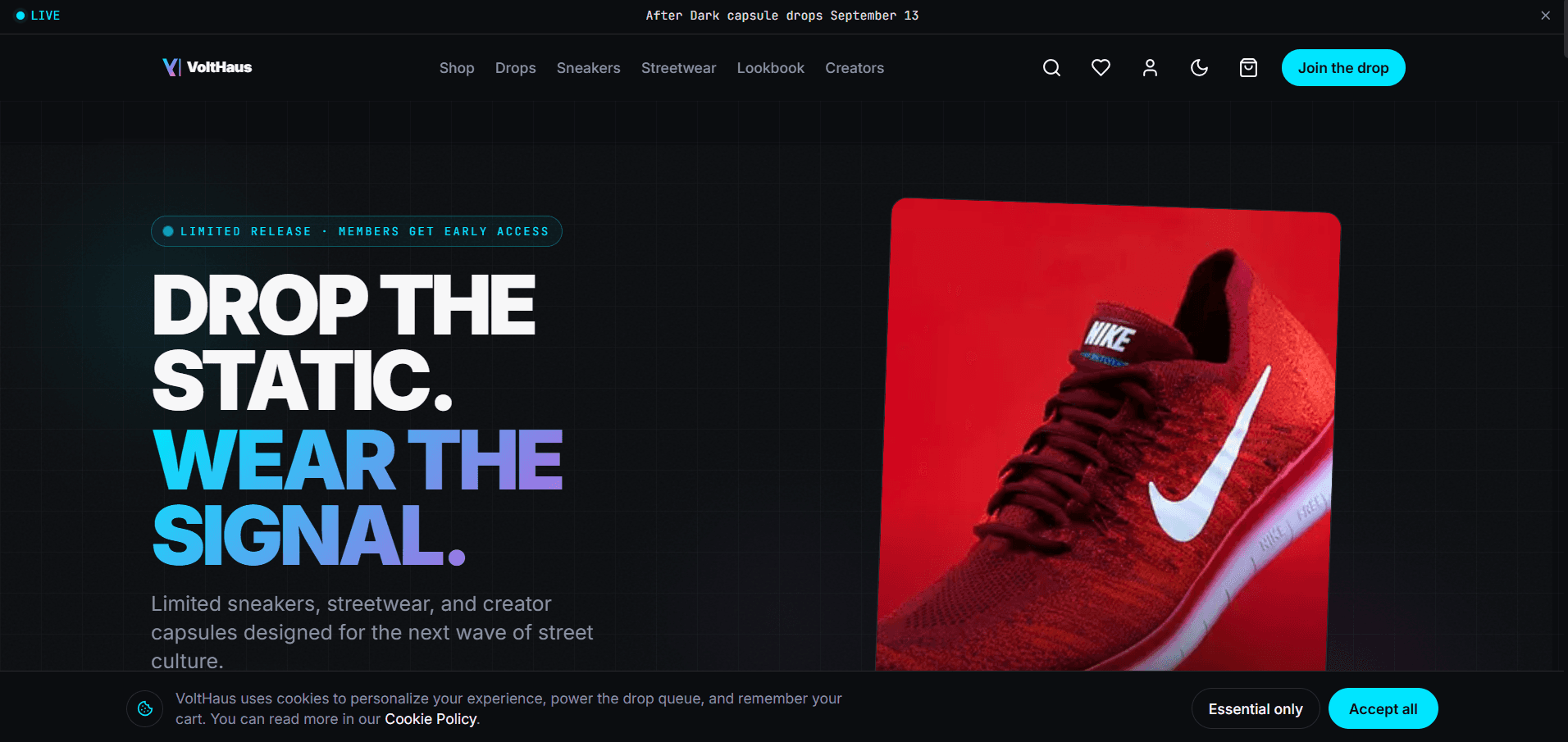
An ecommerce template should help shoppers understand products and complete decisions, not simply display attractive campaign imagery. The strongest source packages balance brand expression with predictable shopping behavior.
Make Product Discovery Obvious
Navigation, categories, search, filters, sorting, availability, and collection labels should use familiar language. Shoppers need to understand where they are and how to narrow the catalog without learning a custom interaction model.
Test long product names, multiple price formats, sale states, unavailable variants, and uneven image ratios. Repeated cards should remain aligned and readable under real catalog data.
Strengthen Product Detail Decisions
Product pages should present clear media, price, variants, stock status, delivery context, returns, and the primary purchase action without forcing unnecessary scrolling. Supporting content should answer genuine objections.
Use real product descriptions and structured attributes instead of copying manufacturer or demo text. Unique useful content improves customer trust and gives search engines a reason to index the page.
Protect The Mobile Checkout Path
Review touch targets, sticky actions, keyboard behavior, form autofill, error messages, and payment handoff on a narrow device. Popups and promotional bars must not cover the cart or checkout controls.
A fast mobile experience benefits from appropriately sized images, limited third-party scripts, reserved layout dimensions, and server-rendered product information.
Use Honest Trust Signals
Policies, contact details, shipping expectations, payment methods, privacy information, and verified customer feedback should be easy to find. Avoid invented purchase counters, ratings, or testimonials that cannot be supported.
Trust also comes from consistent visual behavior: buttons work, links lead where expected, totals are explained, and failures provide a recovery path.
Prepare Search And Measurement
Give category and product pages distinct titles, descriptions, canonical URLs, headings, and useful visible content. Add valid product structured data only when price, availability, and product information match what shoppers see.
Measure product views, search, filter use, add-to-cart, checkout start, completed purchase, and failure events. These signals reveal whether the template supports the business goal after launch.
Explore more on mtverse
Browse dashboard, ecommerce, SaaS, landing page, portfolio, and HTML templates, or explore reusable UI component source.